Kicking off with Forex Trading vs Stock Trading, this opening paragraph is designed to captivate and engage the readers, setting the tone casual formal language style that unfolds with each word.
When it comes to financial markets, understanding the nuances between forex trading and stock trading is essential. From market hours to liquidity differences, each aspect plays a crucial role in determining where to invest your money. Let’s dive into the world of Forex Trading vs Stock Trading to unravel the key differences and similarities between these two trading options.
Forex Trading vs Stock Trading
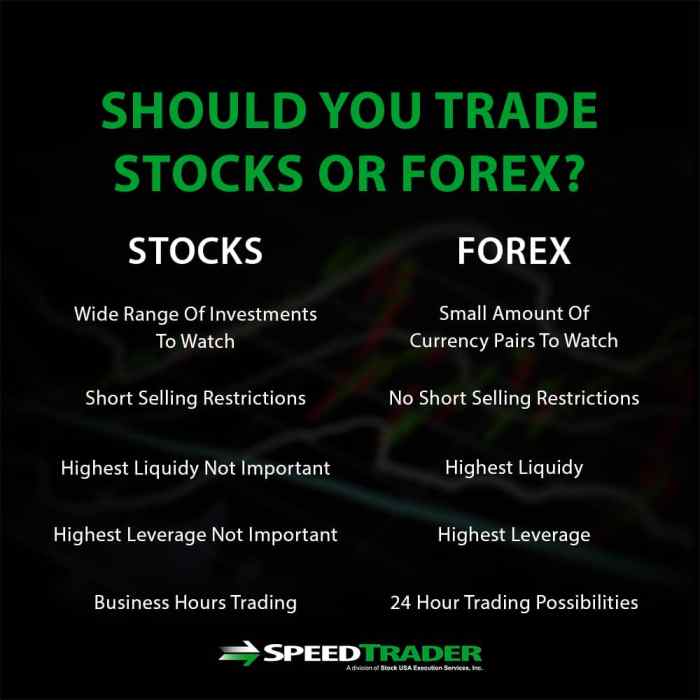
When it comes to investing, two popular options are forex trading and stock trading. Both involve buying and selling financial instruments, but there are key differences between the two.
Basic Concepts
Forex trading involves the buying and selling of currencies in the foreign exchange market, while stock trading involves the buying and selling of shares in publicly traded companies.
Market Hours
Forex trading operates 24 hours a day, five days a week, due to the global nature of the currency market. In contrast, stock trading is limited to the trading hours of the stock exchange where the shares are listed.
Liquidity Differences
The forex market is known for its high liquidity, with trillions of dollars traded daily. This high liquidity means that traders can enter and exit positions with ease. On the other hand, the stock market may have lower liquidity, depending on the specific stock being traded.
Leverage Options
In forex trading, traders have access to high levels of leverage, allowing them to control large positions with a small amount of capital. Stock trading typically offers lower leverage options, with regulations in place to prevent excessive risk-taking.
Forex Trading
Foreign exchange (forex) trading involves buying and selling currencies in the global marketplace to profit from fluctuations in exchange rates.
Major Currency Pairs Traded in the Forex Market
In the forex market, the most traded currency pairs include:
- Euro/US Dollar (EUR/USD)
- US Dollar/Japanese Yen (USD/JPY)
- British Pound/US Dollar (GBP/USD)
- Australian Dollar/US Dollar (AUD/USD)
- US Dollar/Canadian Dollar (USD/CAD)
Impact of Geopolitical Events on Forex Trading
Geopolitical events such as elections, wars, and economic policy changes can have a significant impact on currency values. Traders need to stay informed about global events that can influence the forex market.
Role of Central Banks in Influencing Forex Markets
Central banks play a crucial role in forex trading by setting interest rates, conducting monetary policy, and intervening in the foreign exchange market to stabilize their country’s currency. Traders closely monitor central bank decisions and statements for insights into future market movements.
Stock Trading
Stock trading involves buying and selling shares of publicly traded companies on stock exchanges. When you purchase shares of a company, you essentially own a portion of that company and become a shareholder.
Comparison of Risks
- Stock trading is generally considered to be riskier than forex trading due to the higher volatility of individual stocks. The value of a stock can be affected by various factors such as company performance, industry trends, economic conditions, and market sentiment.
- While forex trading also carries risks, such as currency fluctuations and geopolitical events, stock prices can be more unpredictable and susceptible to sudden changes.
- Diversification is key in stock trading to mitigate risks, as investing in a single company can expose you to higher levels of risk compared to a diversified portfolio.
Role of Dividends
When you own shares of a company, you may be entitled to receive dividends, which are a portion of the company’s profits distributed to shareholders. Dividends can provide a source of passive income for investors and are often paid quarterly or annually. Companies with a history of paying dividends are generally seen as more stable and reliable investments.
Impact of Earnings Reports
Earnings reports released by companies can have a significant impact on their stock prices. Positive earnings reports indicating strong financial performance can lead to an increase in stock prices, while negative reports can result in a decline. Investors closely monitor earnings reports to assess the health and growth potential of a company, making informed decisions on whether to buy, sell, or hold onto their shares.
In conclusion, the comparison between Forex Trading and Stock Trading sheds light on the distinct characteristics of each market. While forex trading offers unique leverage options and operates 24/5, stock trading involves trading shares of ownership in companies and reacts strongly to earnings reports. Understanding these differences can help investors make informed decisions based on their financial goals and risk tolerance.
Query Resolution
What are the major differences between forex trading and stock trading?
Forex trading involves the trading of currencies in the foreign exchange market, while stock trading involves buying and selling shares of ownership in companies.
How do market hours differ between forex and stock trading?
Forex trading operates 24 hours a day, five days a week, while stock trading is limited to the operating hours of the stock exchange.
What role do central banks play in forex trading?
Central banks influence forex markets through monetary policies and interest rate decisions that impact currency values.
How do dividends impact stock trading?
Dividends are payments made by companies to shareholders from profits, affecting stock prices and providing income to investors.
Which factors influence forex trading apart from geopolitical events?
Economic indicators, market sentiment, and central bank interventions also play a significant role in forex trading.