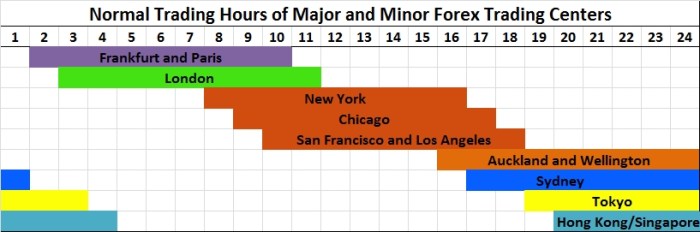
Exploring the world of Foreign Exchange Trading Hours, this introduction delves into the intricacies of market hours and time zones, shedding light on the impact of different regions on trading activities.
As we navigate through the major trading sessions and the significance of these hours in forex markets, we uncover a fascinating realm where global economies intersect and exchange rates fluctuate.
Foreign Exchange Trading Hours
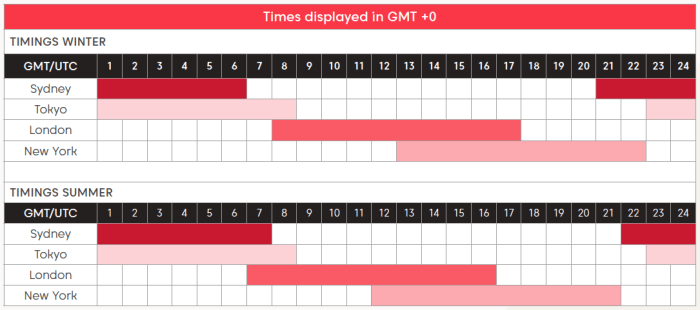
Foreign exchange trading hours refer to the times during which the forex market is open for trading. Unlike traditional stock markets, the forex market operates 24 hours a day, five days a week, due to the global nature of currency trading.
Major Trading Sessions in Forex Markets
The forex market is divided into several major trading sessions, each with unique characteristics and trading volume:
- Asian Session: This session starts with Tokyo and is known for its lower volatility compared to other sessions.
- European Session: The London session is the most active, with significant trading volume and volatility.
- American Session: The New York session overlaps with the European session, leading to increased liquidity and trading opportunities.
Impact of Different Time Zones on Trading Hours in Forex
Given that the forex market operates globally, traders need to consider the impact of different time zones on trading hours:
- Overlap of Sessions: The overlap of major trading sessions can result in higher trading activity and volatility, presenting opportunities for traders.
- Liquidity Variations: Liquidity levels can vary depending on the time of day, with some sessions offering better trading conditions than others.
- Trading Strategies: Traders may adjust their strategies based on the time of day and the trading session to optimize their trading performance.
Foreign Exchange
Foreign exchange, also known as forex or FX, refers to the global marketplace where currencies are traded. It plays a crucial role in the global economy by facilitating international trade, investment, and tourism. The exchange rates of different currencies fluctuate constantly based on various factors, making foreign exchange a dynamic and essential aspect of the financial world.
Significance of Foreign Exchange in Global Economies
Foreign exchange is vital for maintaining stable economic conditions and fostering economic growth. It allows countries to engage in trade with one another by enabling the conversion of one currency into another. This promotes economic integration, enhances market efficiency, and supports international cooperation.
Role of Foreign Exchange in International Trade
In international trade, foreign exchange facilitates the exchange of goods and services between countries with different currencies. Businesses need to convert payments received in foreign currencies back to their domestic currency, and foreign exchange markets provide the necessary liquidity for these transactions. Exchange rates impact the competitiveness of exports and imports, influencing trade balances and economic growth.
Determination of Exchange Rates in the Foreign Exchange Market
Exchange rates in the foreign exchange market are determined by supply and demand forces for different currencies. Various factors such as interest rates, inflation, political stability, and economic performance influence the demand for and supply of currencies, leading to fluctuations in exchange rates. Central banks, financial institutions, and individual traders all play a role in shaping exchange rate movements through their transactions in the forex market.
In conclusion, the realm of Foreign Exchange Trading Hours offers a dynamic landscape where trading sessions from various regions converge, creating a continuous flow of activity that drives the forex market. Dive into this world of time zones and market hours to gain a deeper understanding of how global economies are interconnected through foreign exchange.
General Inquiries
How do trading hours in the foreign exchange market impact trading activities?
Trading hours influence market liquidity and volatility, as different regions engage in trading at specific times, affecting price movements.
What are the major trading sessions in forex markets?
The main trading sessions include the London session, New York session, Tokyo session, and Sydney session, each with its unique characteristics.
How are exchange rates determined in the foreign exchange market?
Exchange rates are influenced by factors like interest rates, economic indicators, geopolitical events, and market speculation, leading to fluctuations in currency values.